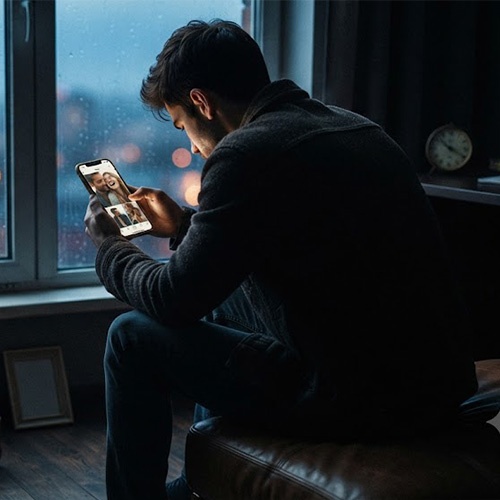
A raw outburst of pent-up emotion — the frustration of waiting, of being overlooked, of finally reaching the breaking point where patience runs out.
The Story Behind Mane Bijanbe
"Mane Bijanbe" (منو بجنبه) translates to "I'm Not Patient" — and the title is not a description. It is a declaration. This is Track 08 on Saymawn's 20 Salegi album, and it is the record's most explosive moment: the instant when restraint collapses and everything that was held back comes pouring out.
The song opens with the title phrase repeated like a breath that has finally escaped: "I'm not patient — I'm not patient." There is no preamble, no apology. The narrator has reached the edge. The next lines name the sources of the exhaustion: "I'm tired of waiting — I'm tired of indifference." These are not dramatic complaints; they are the quiet, accumulated weight of someone who has been overlooked for too long.
The lyrics trace a progressive collapse of tolerance: "However patient I was, it only got worse." The narrator's effort to endure has not been met with resolution — it has been met with escalation. The turning point is blunt: "It's over — it won't come back." There is no ambiguity. This is not a pause. It is an ending.
Then the language shifts from statement to sensation: "My patience has run out — my nerves are shot." The Persian phrases "صبرم تموم شده" and "حوصلهام سر رفته" carry a visceral, physical exhaustion — the feeling of being emptied, drained, finished. And the final repetition — "I can't anymore — I don't want to anymore" — draws the distinction between ability and desire. The narrator hasn't simply run out of strength. They have run out of willingness.
As the eighth track on 20 Salegi, "Mane Bijanbe" occupies a pivotal position in the album's arc. It arrives after the love songs, after the heartbreak songs, after the longing songs. It is the moment when the narrator stops explaining and starts declaring. It is the song that says: enough.
Written, composed, and arranged by Saymawn, "Mane Bijanbe" was recorded at Ofogh Studio (استودیو افق) using Cubase with a U99 microphone.